Let Wildflower Stems Guide the Arrangement: Key Points
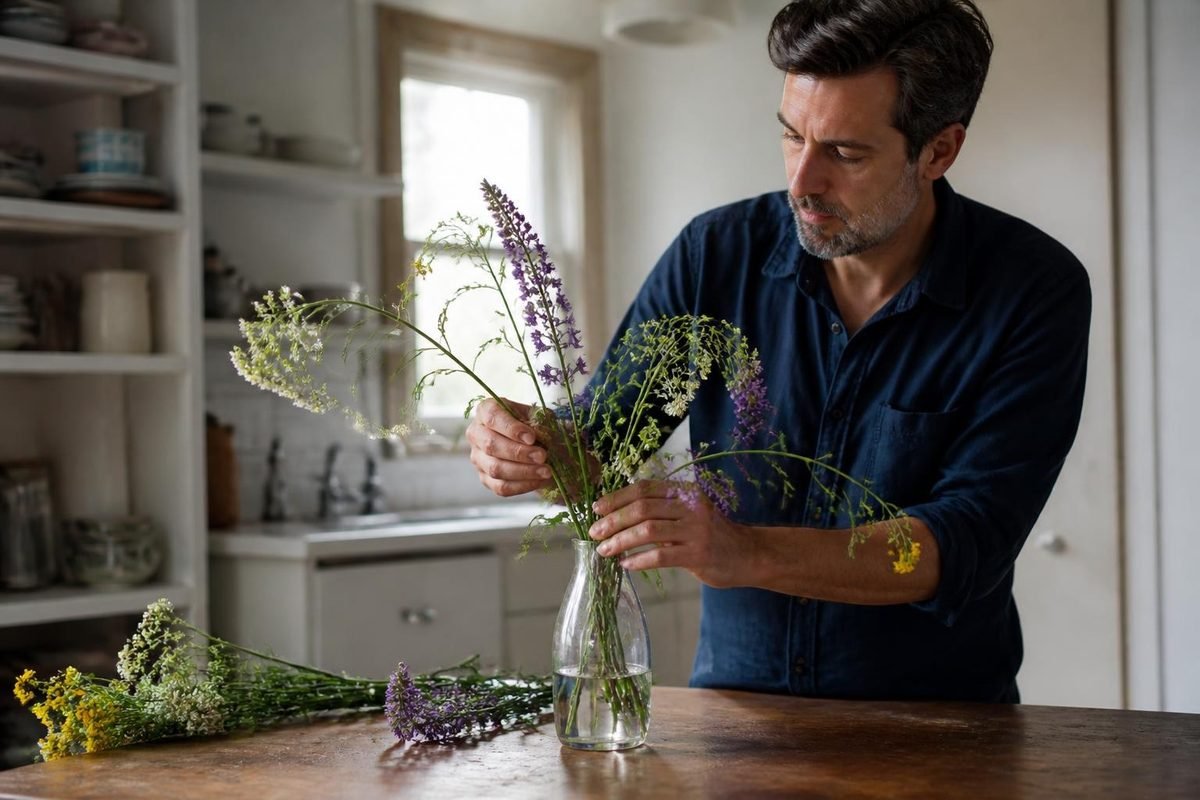
Wildflowers look most at home in a vase when their stems keep their natural bends, branches, and varied heights. Give each bloom room, and let the arrangement feel open rather than shaping it into a tight, even dome.
Notice each stem before trimming
Take a moment to study every flower before placing it in water. A stem may rise straight, arch to one side, branch into smaller shoots, or hold several little blooms. These differences bring character to the finished bunch, so avoid cutting all the stems to one uniform length.
Clear away leaves that would be submerged once the flowers are in the vase, since they should not sit below the waterline. Keep sound leaves higher up if they contribute to the shape. With clean, sharp shears, trim the stem ends gradually. Removing extra length is easy; restoring it is not.
Pick a vase that holds the flowers steady without pressing them together. A small bunch may stay in place in a vessel with a narrow opening. A wider vase offers branches more space, but the stems may need a loose grid inside to keep them supported.
Arrange with room to breathe
Start with a few stems that set the arrangement’s height and width. As you add flowers, turn the vase so you can check the view from every side. Keep especially graceful curves visible instead of hiding them among the central stems.
- Pour fresh water into a clean vase.
- Use a few branching stems first to make an open base.
- Arrange the taller flowers through the middle, with shorter blooms closer to the rim.
- Place curved stems around the edges, following the direction in which they naturally grow.
- Use smaller flowers to fill selected gaps, while keeping some space clear.
- Step back and rotate the vase, shifting any stems that seem crowded.
Handle the flowers gently as you work. They do not all need to point in one direction, and the outline can be uneven. A stem that reaches beyond the vase may give the arrangement a more relaxed feel.
Leave the outline uncluttered
Begin with fewer flowers than you expect to use. Add stems only where extra color or support would help. It is fine for small blooms to cluster in a few spots, but resist filling every opening. Clear space helps the eye trace a stem from the vase up to its flower.
Judge the finished shape from the place where it will be seen. For a dining table, keep the arrangement low enough that people can see across it. If it will sit on a shelf against a wall, taller stems can go toward the back.
Replace the water regularly and remove flowers as they fade. Trim the stem ends again when needed. If one bloom wilts before the others, take it out and give the remaining flowers room to settle into their own shape.
Common wildflower arrangement questions
Do the stems need to be cut to different heights?
No. A range of heights can work well, but let the flowers and the vase guide where you make each cut.
Can wildflowers look good without greenery?
Yes. Branching flower stems and the leaves they carry may provide enough structure on their own.
How can I keep stems from tipping outward?
Choose a vase with a narrower opening, or cross several sturdy stems inside the vase to help hold the others.
Is it best to strip off every leaf?
No. Remove leaves that would sit under the water, and keep healthy upper leaves when they suit the arrangement.
You may also like local flower delivery in Europe